Search Amazon Here

Showing posts with label https://www.facebook.com/facedealsfaceprices/. Show all posts

Friday, 27 October 2017

Kray Twins

Twin brothers Ronald "RonnieKray (24 October 1933 – 17 March 1995) and Reginald"ReggieKray (24 October 1933 – 1 October 2000) were English gangsters who were the foremost perpetrators of organised crime in the East End of London during the 1950s and 1960s. With their gang, the Firm, the Krays were involved in armed robberiesarsonprotection racketsassaults and the murders of Jack "the Hat" McVitie and George Cornell.

Ronald and Reginald Kray

Reggie (left) and Ronnie Kray

Born24 October 1933
HoxtonLondon, EnglandDiedRonnie:
17 March 1995(aged 61) Crowthorne, Broadmoor Berkshire, England
Reggie:
1 October 2000(aged 66)
Norwich, Norfolk, EnglandCause of deathHeart attack (Ronnie)
Bladder cancer (Reggie)Other namesRonnie & ReggieOccupationNightclub owners, gangstersCriminal statusBoth deceasedSpouse(s)Reggie:
Frances Shea (m. 1965;d. 1967)
Roberta Jones (m. 1997)[1][2]
Ronnie:
Elaine Mildener (m. 1985; div. 1989)[3]
Kate Howard (m. 1989;div. 1994)[3]

As West End nightclub owners, they mixed with politicians and prominent entertainers such as Diana DorsFrank Sinatra and Judy Garland. The Krays were much feared within their social environment; in the 1960s, they became celebrities, being photographed by David Bailey and interviewed on television.

They were arrested on 8 May 1968 and convicted in 1969, by the efforts of detectives led by Detective Superintendent Leonard "Nipper" Read. Both were sentenced to life imprisonment. Ronnie remained in Broadmoor Hospital until his death on 17 March 1995; Reggie was released from prison on compassionate grounds in August 2000, eight and a half weeks before his death from cancer.

Thursday, 26 October 2017

History of the World

This article is about the history of humanity. For the entire history of Earth, see History of Earth. For a field of historical study, see World history. For other uses, see History of the world (disambiguation).

The history of the world is the history of humanity (or human history), as determined from archaeologyanthropologygeneticslinguistics, and other disciplines; and, for periods since the invention of writing, from recorded history and from secondary sourcesand studies.

World population, 10,000 BCE – 2,000 CE (vertical population scale is logarithmic)[1]

Humanity's written history was preceded by its prehistory, beginning with the Palaeolithic Era ("Early Stone Age"), followed by the Neolithic Era ("New Stone Age"). The Neolithic saw the Agricultural Revolution begin, between 8000 and 5000 BCE, in the Near East's Fertile Crescent. The Agricultural Revolution marked a fundamental change in history, with humans beginning the systematic husbandry of plants and animals.[2] As agriculture advanced, most humans transitioned from a nomadic to a settled lifestyle as farmers in permanent settlements. The relative security and increased productivity provided by farming allowed communities to expand into increasingly larger units, fostered by advances in transportation.

Whether in prehistoric or historic times, people always had to be near reliable sources of potable water. Cities developed on riverbanks as early as 3000 BCE, when some of the first well-developed settlements arose in Mesopotamia,[3] on the banks of Egypt's Nile River,[4][5] in the Indus River valley,[6] and along China's rivers.[7][8] As farming developed, grain agriculture became more sophisticated and prompted a division of labour to store food between growing seasons. Labour divisions led to the rise of a leisured upper class and the development of cities, which provided the foundation for civilization. The growing complexity of human societies necessitated systems of accounting and writing.

With civilizations flourishing, ancient history("Antiquity," including the Classical Age,[9] up to about 500 CE[10]) saw the rise and fall of empires. Post-classical history (the "Middle Ages," c. 500–1500 CE [11]) witnessed the rise of Christianity, the Islamic Golden Age (c. 750 CE – c. 1258 CE), and the early Italian Renaissance (from around 1300 CE). The Early Modern Period, sometimes referred to as the "European Age",[12] from about 1500 to 1800,[13] included the Age of Enlightenmentand the Age of Discovery. The mid-15th-century invention of modern printing, employing movable type,[14] revolutionized communication and facilitated ever wider dissemination of information, helping end the Middle Ages and ushering in the Scientific Revolution.[15] By the 18th century, the accumulation of knowledge and technologyhad reached a critical mass that brought about the Industrial Revolution[16] and began the Late Modern Period, which starts around 1800 and includes the current day.[17]

This scheme of historical periodization(dividing history into Antiquity, Post-Classical, Early Modern, and Late Modern periods) was developed for, and applies best to, the history of the Old World, particularly Europe and the Mediterranean. Outside this region, including ancient China and ancient India, historical timelines unfolded differently. However, by the 18th century, due to extensive world trade and colonization, the histories of most civilizations had become substantially intertwined. In the last quarter-millennium, the rates of growth of population, knowledge, technology, communications, commerce, weapons destructiveness, and environmental degradation have greatly accelerated, creating opportunities and perils that now confront the planet's human communities.[18]

Portal:Health and fitness

The health and fitness portal

The most widely accepted definition of health is that of the World Health Organization Constitution. It states: "health is a state of complete physical, mental and social well-being and not merely the absence of disease or infirmity" (World Health Organization, 1946). In more recent years, this statement has been amplified to include the ability to lead a "socially and economically productive life". The WHO definition is not without criticism, mainly that it is too broad. Some argue that health cannot be defined as a state at all, but must be seen as a dynamic process of continuous adjustment to the changing demands of living. In spite of its limitations, the concept of health as defined by WHO is broad and positive in its implications, in that it sets out a high standard for positive health.

The most solid aspects of wellness that fit firmly in the realm of medicine are the environmental health, nutrition, disease prevention, and public health matters that can be investigated and assist in measuring well-being. Please see our medical disclaimer for cautions about Wikipedia's limitations.

Read more...

edit 

Selected biography
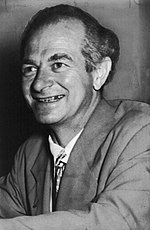
Linus Carl Pauling(February 28, 1901 – August 19, 1994) was an Americanquantum chemistand biochemist, widely regarded as the premier chemist of the twentieth century. Pauling was a pioneer in the application of quantum mechanics to chemistry, and in 1954 was awarded the Nobel Prize in chemistry for his work describing the nature of chemical bonds. He also made important contributions to crystal and protein structure determination, and was one of the founders of molecular biology. Pauling received the Nobel Peace Prize in 1962 for his campaign against above-ground nuclear testing, becoming only one of four people in history to individually receive two Nobel Prizes. Later in life, he became an advocate for regular consumption of massive doses of Vitamin C. Pauling coined the term "orthomolecular" to refer to the practice of varying the concentration of substances normally present in the body to prevent and treat disease, and promote health.

Pauling was first introduced to the concept of high-dose vitamin C by biochemist Irwin Stone in 1966 and began taking several grams every day to prevent colds. Excited by the results, he researched the clinical literature and published "Vitamin C and the Common Cold" in 1970. He began a long clinical collaboration with the British cancer surgeon, Ewan Cameron, MD [1] in 1971 on the use of intravenous and oral vitamin C as cancer therapy for terminal patients. Cameron and Pauling wrote many technical papers and a popular book, "Cancer and Vitamin C", that discussed their observations. He later collaborated with the Canadian physician, Abram Hoffer, MD, PhD,[2] on a micronutrient regimen, including high-dose vitamin C, as adjunctive cancertherapy.

The selective toxicity of vitamin C for cancer cells has been demonstrated repeatedly in cell culture studies. The Proceedings of the National Academy of Sciences [3] recently published a paper demonstrating vitamin C killing cancer cells. As of 2005, some physicians have called for a more careful reassessment of vitamin C, especially intravenous vitamin C, in cancer treatment.

With two colleagues, Pauling founded the Institute of Orthomolecular Medicine in Menlo Park, California, in 1973, which was soon renamed the Linus Pauling Institute of Science and Medicine. Pauling directed research on vitamin C, but also continued his theoretical work in chemistry and physics until his death in 1994. In his last years, he became especially interested in the possible role of vitamin C in preventing atherosclerosisand published three case reports on the use of lysine and vitamin C to relieve angina pectoris. In 1996, the Linus Pauling Institute moved from Palo Alto, California, to Corvallis, Oregon, to become part of Oregon State University, where it continues to conduct research on micronutrientsphytochemicals(chemicals from plants), and other constituents of the diet in preventing and treating disease.

Read more...

edit 

Reference links

Health category on dmoz. Contains sub-categories about nutrition, fitness, …World Health OrganizationUSA Centers for Disease Control and PreventionUK National Health Service News

edit 

Health and fitness news

Wikinews health portal

October 20Arrangement of light receptors in the eye may cause dyslexia, scientists sayJuly 27Publisher withdraws book about Nelson Mandela's final days after family complaintApril 28Shrink-wrapped sheep survive: Researchers say 'Biobag' artificial uterus, successful on lambs, may one day be suitable for use on premature human babiesApril 16Canada to legalise marijuana to 'make it more difficult for kids to access'

Ongoing health news

Avian influenzaHealth News Collection

edit 

Quotes

“Be careful about reading health books. You may die of a misprint.”

— Mark Twain

"The more you sweat in training, the less you bleed in battle."

Navy SEALs

"He who has health has hope, and he who has hope has everything." [Arabian Proverb]

“Human life needs superhuman health.”

- Leonid S. Sukhorukov

"An apple a day keeps the doctor away."

"Do not spend health to gain money, and then, do not spend money to regain health"

" Honour your Divine Body Temple"

Fitness Guru Derek Duke Noble

"To sit in a comfortable position or posture for everlasting period is called asana"

- BirenDra ShaH

Health is very important for our life [kailash vishwakarma]

edit 

WikiProjects

Health WikiProjectDrug WikiProjectNursing WikiProjectWikiProject on Alternative Medicine

edit 

Things you can do

Improve the see also reference sections in health articlesCheck the related topic lists for completenessHelp change the articles on this portal at the beginning of each month

edit 

Topics   (all)

Main articles: HealthSelf-care, and Health science

General  – Health care • Health care industry • Health disparities • Mental health • Population health • Preventive medicine • Public health • Complementary and alternative medicine

Self-care – Body composition • Life extension • Longevity • Physical fitness

Nutrition – Calorie restriction • Dietary supplements (Amino acidsMineralsNootropicsNutrientsVitamins) • Diet (nutrition) • Dieting • Healthy eating pyramid.Physical exercise – Stretching • Overtraining • Aerobic exercise • Anaerobic exercise • Sport • WalkingHygiene – Cleanliness • Oral hygiene • Occupational hygiene

Health science – Dentistry • Occupational therapy • Optometry • Pharmacy • Physiotherapy • Speech-Language Pathology

Medicine – Midwifery • Nursing • Veterinary medicine• Dentistry • Holistic MedicineHuman medicine – Cardiology • Dermatology • Emergency medicine • Endocrinology and Diabetology • Epidemiology • Geriatrics • Hematology • Internal medicine • Nephrology • Neurology • Oncology • Pathology • Pediatrics • Psychiatry • Rheumatology • Surgery • UrologyIllness  – Aging • Alcoholism • Atrophy • Deficiency disease • Depression • Disease • Disorders (types) • Drug abuse • Eating disorder • Foodborne illness • Malnutrition • Obesity • Smoking

edit 

Lists of basic topics   (all)

See also: Biology (below)

Health – Health is a state of complete physical, mental and social well-being. this is a level of functional and (or) metabolic efficiency of a person in mind, body and spirit; being free from illness, injury or pain (as in “good health” or “healthy”). The World Health Organization (WHO) defined health in its broader sense in 1946 as "a state of complete physical, mental, and social well-being and not merely the absence of disease or infirmity."

Death – cessation of life.Exercise – any bodily activity that enhances or maintains physical fitness and overall health and wellness. It is performed for various reasons including strengthening muscles and the cardiovascular system, honing athletic skills, weight loss or maintenance, and mental health including the prevention of depression. Frequent and regular physical exercise boosts the immune system, and helps prevent the "diseases of affluence" such as heart disease, cardiovascular disease, Type 2 diabetes mellitus and obesity.Nutrition – provision, to cells and organisms, of the materials necessary (in the form of food) to support life.Life extension – The study of slowing down or reversing the processes of aging to extend both the maximum and average lifespan.Health sciences – applied sciences that address the use of science, technology, engineering or mathematics in the delivery of healthcare to human beings.Medicine – science and art of healing. It encompasses a variety of health care practices evolved to maintain and restore health by the prevention and treatment of illness.Anesthesia – a way to control pain during a surgery or procedure by using medicine called anesthetics.Cardiology – branch of medicine dealing with disorders of the human heart. The field includes medical diagnosis and treatment of congenital heart defects, coronary artery disease, heart failure, valvular heart disease and electrophysiology.Clinical research – aspect of biomedical research that addresses the assessment of new pharmaceutical and biological drugs, medical devices and vaccines in humans.Diabetes – a group of metabolic diseases in which the person has high blood glucose (blood sugar) above 200mg/dl, either because insulin production is inadequate, or because the body's cells do not respond properly to insulin, or both.Dentistry – branch of medicine that is involved in the study, diagnosis, prevention, and treatment of diseases, disorders and conditions of the mouth, maxillofacial area and the adjacent and associated structures (teeth) and their impact on the human body.Emergency medicine – medical specialty involving care for undifferentiated, unscheduled patients with acute illnesses or injuries that require immediate medical attention. Emergency physicians undertake acute investigations and interventions to resuscitate and stabilize patients.Obstetrics – medical specialty dealing with the care of all women's reproductive tracts and their children during pregnancy (prenatal period), childbirth and the postnatal period.Trauma & Orthopedics – medical specialty dealing with bones, joints and operative management of trauma.Psychiatry – medical specialty devoted to the study and treatment of mental disorders. These mental disorders include various affective, behavioural, cognitive and perceptual abnormalities.Autism a mental condition, present from early childhood, characterized by great difficulty in communicating and forming relationships with other people and in using language and abstract concepts.Psychiatric survivors movement – is a diverse association of individuals who either currently access mental health services (known as consumers or service users), or who are survivors of interventions by psychiatry, or who are ex-patients of mental health.

edit 

Lists of topics   (all)

MedicineAcronyms in healthcare • Abbreviations  (for medical organizations and personnel) • Alternative medicine • Pharmaceutical Drugs • Psychiatric drugs (by condition treated) • Psychotherapies • Reference ranges for common blood tests • Surgical procedures • SymptomsDiseasesGenetic disorders • Infectious diseases • Mental illnesses • Notifiable diseases • Neurological disorders • List of DSM-IV codesFoods and NutritionAntioxidants in food • B vitamins • Beverages • Cuisines (African • Americas • Asian • European • Oceanic) • Diets • Foods (Food origins • Fruit • Herbs and spices • Meat • Nuts • Prepared foods • Seafood • Seeds • Vegetables) • Food additives (Codex Alimentarius) • Macronutrients • Micronutrients • Nootropics (smart drugs) • Poor nutrition

edit 

Glossaries   (all)

Alternative medicine Anatomy Location Motion Communication disorders Diabetes Acronyms in healthcare Medical terminology Roots, suffixes and prefixes Medical slang Abbreviations Prescription abbreviationsPsychiatry Clinical research

edit 

Related portals   (all)

Health and fitness

Medicine • Biology • Nursing • Dentistry • Food • Pharmacy and Pharmacology • Psychiatry • Pervasive developmental disorders • Complementary and Alternative Medicine • Sexuality • Viruses • Trauma & Orthopaedics • Sports

edit 

Categories

Main categories: HealthSelf care, and Healthcare occupations

Self care Health promotion Life extension Prevention Sexual health Sleep Skin Care

Nutrition Dietary supplements Dietetics Nutrients Amino acids Minerals Nootropics Phytochemicals VitaminsNutritional advice pyramids

Exercise Aerobics Bodyweight exercise (Calisthenics) Cycling Exercise equipment Exercise instructors Dancing Exercise physiology Hiking Pilates Running Sports Swimming T'ai Chi Ch'uan Walking Weight training exercises Yoga

Hygiene Cleaning Oral hygiene

Positive psychology Mental health Psychotherapy

Public health Health by country Healthcare Health law Health promotion Health standards Hospitals Occupational safety and health Pharmaceutical industry Pharmaceuticals policy Safety

Health science Clinical research Diseases Epidemiology Midwifery Nursing Nutrition Optometry Pharmacy Public health

Medicine

Human medicine Alternative medicine Cardiology Endocrinology Forensics Gastroenterology Human GeneticsGeriatrics Gerontology Gynecology Hematology Nephrology Neurology ObstetricsOncology Ophthalmology Orthopedic surgical procedures Pathology Pediatrics Psychiatry Rheumatology Surgery Urology

Dentistry Dental hygiene Orthodontics

Veterinary medicine

Wednesday, 25 October 2017

The 10 Most Significant Scientific Discoveries Of the Year (So Far)

The year 2017 has catapulted us into a science-fiction future, from human cell regeneration for growing organs, to banishing genetic disease through breakthrough gene-editing techniques and recycling orbital rockets — and it’s only August at the time of writing. A lot has happened in the last eight months; scientific breakthroughs have made our lives safer, easier and more enjoyable. And the scientific community is only getting started.

Researchers and scientists around the globe have worked tirelessly to bring us this future, so it’s worthwhile to take a step back and applaud their tremendous efforts. The world of tomorrow is being shaped as you read this, so let’s have a look at ten of the biggest stories in science of this year, so far.

Scientists Successfully Edited the First Human Embryo Ever in The U.S.

Image Source: Getty Images

Jul 27, 2017: Researchers in Portland, Oregon have achieved a significant breakthrough in gene-editing technology. Taking advantage of the revolutionary gene- editing technique, CRISPR, a gene linked to heart conditions was successfully “deleted” from a human embryo.

Read the full story here.


Scientists Have Finally Created Metallic Hydrogen

Image Source: Harvard University

January 27, 2017: For the first time in the wold, scientists created metallic hydrogen by applying almost five million atmospheres of pressure to liquid hydrogen. That’s about five million times the pressure we experience at sea level, and 4,500 times that at the bottom of the ocean. It is the first time a state of hydrogen has existed in a metallic state on Earth. In its metallic state, hydrogen could act as a genuine superconductor and could revolutionize everything from energy storage to rocketry.

Read the full story here.


Scientists Discovered an Alien Planet That’s The Best Candidate for Life As We Know It

Image Source: NASA Ames/JPL-Caltech/T. Pyle

On April 19 this year scientists at the European Organisation for Astronomical Research (ESO) found the best candidate for extraterrestrial life so far. The super-Earth named LHS 1140b was found in the habitable zone of a dim star 40 light-years away from Earth. It receives about half as much sunlight from its star, LHS 1140, as the Earth does from the Sun.

“This is the most exciting exoplanet I’ve seen in the past decade,” author Jason Dittmann of the Harvard-Smithsonian Center for Astrophysics said in an ESO press release. “We could hardly hope for a better target to perform one of the biggest quests in science — searching for evidence of life beyond Earth.”

Read the full story here.


A World First CRISPR Trial Will Edit Genes Inside the Human Body

Image Source: National Institute of Allergy and Infectious Diseases, National Institutes of Health

June 1, 2017: In one of the biggest scientific breakthroughs of 2017, scientists used the gene-editing technology CRISPR (the most accessible gene-editing technique so far) inside the human body for the very first time. A new human trial aimed to remove the human papillomavirus (HPV) by applying a gel that carries the necessary DNA coding to the cervixes of 60 women to disable the tumor growth mechanism.

Read the full story here.


Breakthrough Initiative Will Grow Organs and Regenerate Human Tissue

Image Source: Wake Forest Baptist Medical Center

May 1, 2017: Major strides have been made in the field of regenerative medicine. The Wake Forest Institute for Regenerative Medicine is currently leading projects to speed up the development of artificially growing human tissue and even organs in a lab to help patients worldwide. These new initiatives may one day repair nerve damage and even grow entire limbs and organs.

Read the full story here.


DeepMind Has Taught an AI to Do Something Quite Remarkable

Image Source: DeepMind/YouTube

July 11, 2017: Google’s artificial intelligence subsidiary DeepMindpublished a paper illustrating the way they are teaching AI computer agents to navigate complex environments. It may look funnyto us, but it’s a big step forward for autonomous AI movement.

Read the full story here.


SpaceX’s Historic Launch Proves Recycled Rockets Are the Future of Space Exploration

March 30, 2017: SpaceX made space launch history in March by successfully relaunching and re-landing a used Falcon 9 rocket booster via rocket descent. This is the stuff of old-school scifi. Already having been the cheapest orbital rocket system, this breakthrough brought the affordability down even more — a saving of more than $18 million per launch.

Read the full story here.

Egyptian pyramids

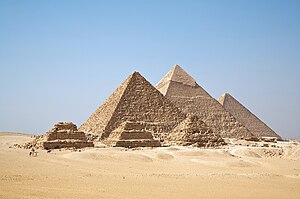
A view of the pyramids at Giza from the plateau to the south of the complex. From left to right, the three largest are: the Pyramid of Menkaure, the Pyramid of Khafre and the Great Pyramid of Khufu. The three smaller pyramids in the foreground are subsidiary structures associated with Menkaure's pyramid.


Unicode: 𓍋𓅓𓂋𓉴Pyramid
in hieroglyphs

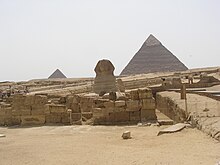
A view of the Pyramid of Khafre from the Sphinx.

The Egyptian pyramids are ancient pyramid-shaped masonry structures located in Egypt.

As of November 2008, sources cite either 118 or 138 as the number of identified Egyptian pyramids.[1][2] Most were built as tombs for the country's pharaohs and their consorts during the Old and Middle Kingdomperiods.[3][4][5]

The earliest known Egyptian pyramids are found at Saqqara, northwest of Memphis. The earliest among these is the Pyramid of Djoser(constructed 2630 BC–2611 BC) which was built during the third dynasty. This pyramid and its surrounding complex were designed by the architect Imhotep, and are generally considered to be the world's oldest monumental structures constructed of dressed masonry.[6]

The most famous Egyptian pyramids are those found at Giza, on the outskirts of Cairo. Several of the Giza pyramids are counted among the largest structures ever built.[7] The Pyramid of Khufu at Giza is the largest Egyptian pyramid. It is the only one of the Seven Wonders of the Ancient World still in existence.

Greek mythology

Bust of Zeus, found in OtricoliItaly (now in Sala Rotonda, Museo Pio-ClementinoVatican).

Greek mythology is the body of myths and teachings that belong to the ancient Greeks, concerning their gods and heroesthe nature of the world, and the origins and significance of their own cult and ritual practices. It was a part of the religion in ancient Greece. Modern scholars refer to and study the myths in an attempt to shed light on the religious and political institutions of ancient Greece and its civilization, and to gain understanding of the nature of myth-making itself.[1]

Greek mythology has had an extensive influence on the culture, arts, and literature of Western civilization and remains part of Western heritage and language. Poets and artists from ancient times to the present have derived inspiration from Greek mythology and have discovered contemporary significance and relevance in the themes.[2]

Achilles and Penthesileia by Exekias, c. 540 BC, British Museum, London.

Greek mythology is explicitly embodied in a large collection of narratives, and implicitly in Greek representational arts, such as ancient vase-paintings and votive gifts. Greek myth attempts to explain the origins of the world, and details the lives and adventures of a wide variety of gods, goddesses, heroes, heroinesand mythological creatures. These accounts initially were disseminated in an oral-poetic tradition; today the Greek myths are known primarily from ancient Greek literature. The oldest known Greek literary sources, Homer's epic poems Iliad and Odyssey, focus on the Trojan War and its aftermath. Two poems by Homer's near contemporary Hesiod, the Theogony and the Works and Days, contain accounts of the genesis of the world, the succession of divine rulers, the succession of human ages, the origin of human woes, and the origin of sacrificial practices. Myths are also preserved in the Homeric Hymns, in fragments of epic poems of the Epic Cycle, in lyric poems, in the works of the tragediansand comedians of the fifth century BC, in writings of scholars and poets of the Hellenistic Age, and in texts from the time of the Roman Empire by writers such as Plutarchand Pausanias.

Archaeological findings provide a principal source of detail about Greek mythology, with gods and heroes featured prominently in the decoration of many artifacts. Geometric designs on pottery of the eighth century BC depict scenes from the Trojan cycle as well as the adventures of Heracles. In the succeeding ArchaicClassical, and Hellenistic periods, Homeric and various other mythological scenes appear, supplementing the existing literary evidence.[3]

Loch Ness Monster

Nessie" redirects here. For other uses, see Loch Ness Monster (disambiguation) and Nessie (disambiguation).

The Loch Ness Monster, or Nessie, is an aquatic being which reputedly inhabits Loch Ness in the Scottish Highlands. It is similar to other supposed lake monsters in Scotland and elsewhere, and is often described as being large in size, with a long neck and one or more humps protruding from the water. Popular interest and belief in the creature has varied since it was brought to worldwide attention in 1933. Evidence of its existence is anecdotal, with a few disputed photographs and sonar readings.

Loch Ness Monster

The "surgeon's photograph" of 1934, now known to have been a hoax[1]

Similar creaturesChamp (folklore)OgopogoMokele-mbembeOther name(s)Nessie, Niseag,
Nessiteras rhombopteryxCountryScotlandRegionLoch Ness

The creature commonly appears in Western media where it manifests in a variety of ways. The scientific community regards the Loch Ness Monster as a being from folklore without biological basis, explaining sightings as hoaxeswishful thinking, and the misidentification of mundane objects

Health

Health is the level of functional and metabolicefficiency of a living organism. In humans it is the ability of individuals or communities to adapt and self-manage when facing physical, mental, psychological and social changes with environment.[1] The World Health Organization (WHO) defined health in its broader sense in its 1948 constitution as "a state of complete physical, mental, and social well-being and not merely the absence of disease or infirmity."[2][3] This definition has been subject to controversy, in particular as lacking operational value, the ambiguity in developing cohesive health strategies, and because of the problem created by use of the word "complete".[4][5][6] Other definitions have been proposed, among which a recent definition that correlates health and personal satisfaction.[7] [8] Classification systems such as the WHO Family of International Classifications, including the International Classification of Functioning, Disability and Health (ICF) and the International Classification of Diseases (ICD), are commonly used to define and measure the components of health.

Tuesday, 24 October 2017

Obesity

Obesity is a medical condition in which excess body fat has accumulated to the extent that it may have a negative effect on health.[1] People are generally considered obese when their body mass index (BMI), a measurement obtained by dividing a person's weight by the square of the person's height, is over 30 kg/m2, with the range 25–30 kg/m2defined as overweight.[1] Some East Asiancountries use lower values.[8] Obesity increases the likelihood of various diseases and conditions, particularly cardiovascular diseasestype 2 diabetesobstructive sleep apnea, certain types of cancerosteoarthritisand depression.[2][3]

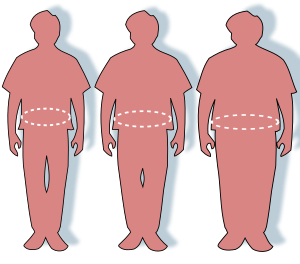
ObesitySilhouettes and waist circumferencesrepresenting optimal, overweight, and obeseSpecialtyEndocrinologySymptomsIncreased fat[1]ComplicationsCardiovascular diseasestype 2 diabetesobstructive sleep apnea, certain types of cancerosteoarthritisdepression[2][3]CausesExcessive food, lack of exercise, genetics[1][4]Diagnostic methodBMI > 30 kg/m2[1]PreventionSocietal changes, personal choices[1]TreatmentDiet, exercise, medications, surgery[1][5][6]PrognosisReduce life expectancy[2]Frequency700 million / 12% (2015)[7]

[edit on Wikidata]

Obesity is most commonly caused by a combination of excessive food intake, lack of physical activity, and genetic susceptibility.[1][4] A few cases are caused primarily by genesendocrine disordersmedications, or mental disorder.[9] The view that obese people eat little yet gain weight due to a slow metabolism is not generally supported.[10] On average, obese people have a greater energy expenditure than their normal counterparts due to the energy required to maintain an increased body mass.[10][11]

Obesity is mostly preventable through a combination of social changes and personal choices.[1] Changes to diet and exercising are the main treatments.[2] Diet quality can be improved by reducing the consumption of energy-dense foods, such as those high in fat and sugars, and by increasing the intake of dietary fiber.[1] Medications may be used, along with a suitable diet, to reduce appetite or decrease fat absorption.[5] If diet, exercise, and medication are not effective, a gastric balloon or surgery may be performed to reduce stomach volume or length of the intestines, leading to feeling full earlier or a reduced ability to absorb nutrients from food.[6][12]

Obesity is a leading preventable cause of death worldwide, with increasing rates in adults and children.[1][13] In 2015, 600 million adults (12%) and 100 million children were obese.[7] Obesity is more common in women than men.[1] Authorities view it as one of the most serious public health problems of the 21st century.[14] Obesity is stigmatized in much of the modern world (particularly in the Western world), though it was seen as a symbol of wealth and fertility at other times in history and still is in some parts of the world.[2][15] In 2013, the American Medical Association classified obesity as a disease

About Blogs

"Blogger" redirects here. For the Google service with same name, see Blogger (service). For other uses, see Blog (disambiguation).

Not to be confused with .blog.

blog (a truncation of the expression "weblog")[1] is a discussion or informational website published on the World Wide Webconsisting of discrete, often informal diary-style text entries ("posts"). Posts are typically displayed in reverse chronological order, so that the most recent post appears first, at the top of the web page. Until 2009, blogs were usually the work of a single individual,[citation needed] occasionally of a small group, and often covered a single subject or topic. In the 2010s, "multi-author blogs" (MABs) have developed, with posts written by large numbers of authors and sometimes professionally edited. MABs from newspapers, other media outlets, universitiesthink tanksadvocacy groups, and similar institutions account for an increasing quantity of blog traffic. The rise of Twitter and other "microblogging" systems helps integrate MABs and single-author blogs into the news media. Blog can also be used as a verb, meaning to maintain or add content to a blog.

The emergence and growth of blogs in the late 1990s coincided with the advent of web publishing tools that facilitated the posting of content by non-technical users who did not have much experience with HTML or computer programming. Previously, a knowledge of such technologies as HTML and File Transfer Protocol had been required to publish content on the Web, and as such, early Web users tended to be hackers and computer enthusiasts. In the 2010s, the majority are interactive Web 2.0 websites, allowing visitors to leave online comments, and it is this interactivity that distinguishes them from other static websites.[2] In that sense, blogging can be seen as a form of social networking service. Indeed, bloggers do not only produce content to post on their blogs, but also often build social relations with their readers and other bloggers.[3]However, there are high-readership blogs which do not allow comments.

Many blogs provide commentary on a particular subject or topic, ranging from politics to sports. Others function as more personal online diaries, and others function more as online brand advertising of a particular individual or company. A typical blog combines text, digital images, and links to other blogs, web pages, and other media related to its topic. The ability of readers to leave publicly viewable comments, and interact with other commenters, is an important contribution to the popularity of many blogs. However, blog owners or authors often moderate and filter online comments to remove hate speech or other offensive content. Most blogs are primarily textual, although some focus on art (art blogs), photographs (photoblogs), videos (video blogs or "vlogs"), music (MP3 blogs), and audio (podcasts). In education, blogs can be used as instructional resources. These blogs are referred to as edublogsMicroblogging is another type of blogging, featuring very short posts.

On 16 February 2011, there were over 156 million public blogs in existence. On 20 February 2014, there were around 172 million Tumblr[4] and 75.8 million WordPress[5] blogs in existence worldwide. According to critics and other bloggers, Blogger is the most popular blogging service used today. However, Blogger does not offer public statistics.[6][7] Technorati lists 1.3 million blogs as of February 22, 2014.[8]

Driving Theory

Take an official free practice driving theory test

Take official practice driving theory tests - for free

Here you can take official practice theory tests from the Driver and Vehicle Standards Agency (DVSA), free of charge.

Practice theory tests are available for learner car drivers, motorcyclists, lorry drivers, and bus and coach drivers.

Select your vehicle type:

Car

Motorcycle

Bus and coach

Large vehicles

Need instant online access to the DVSA official learning material?
Start revising now using the DVSA Learning Zone, a flexible tool allowing you to access the official revision material on your smartphone, tablet or computer. Visit www.dvsalearningzone.co.uk.

Need more help to prepare for your theory test? Visit our online shop.

Free E Books

Get Your Free E Books Here This Is A GREAT Story! 5.0 out of 5 starsVery short book but good when you just don't have time to r...